The advent of any new form of media carries with it the introduction of debate. Can film ever carry a story as well as literature? Will a soundtrack ever incite the same emotions as a symphony? As time passes, the debate settles, and the lines are drawn for that particular medium. Videogames, the relatively young form of media that they are, are still wavering amidst the debate that previously surrounded other forms of entertainment. In particular, videogames face the same difficult views that accompanied theater, and ultimately film, during their respective times of origin. While film and theater have rooted themselves within our culture, and have taken favor by those who would deem each medium a form of art, videogames still face a strong opposition. Those who feel videogames are either unworthy or unfit to be critiqued and appreciated as an art form weigh heavily on the issue, and their opinions sway an obvious majority to their cause. Unfortunately for those hoping to halt the artistic appreciation of videogames, the undeniable presence of art in all facets of videogames, be it creation, the end product, or the experience of play, proves that videogames are a new and emerging art form.
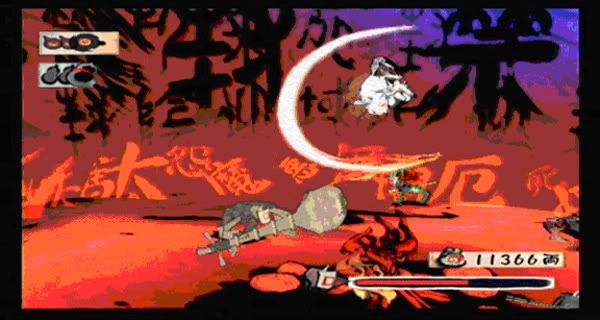
The traditional brushstroke style of Capcom’s Okami surely deserves praise as an amazing piece of artwork.
The first appearance of art within a videogame is noted before the game is even a playable product. The creation of a videogame requires the presence of an artist from as early as the concept stage. Artists contribute to key moments in the creation of a game, whether as concept artists, character artists, animators, or level designers. (McCarthy 100) Artists also deliver to more than the visual aspect of a game, as composers often deliver the sound effects and music, and occasionally a game that offers a heavily scripted narrative or numerous dialogue situations will find it requiring input from authors and screenwriters. (McCarthy 110, 120) Videogames and film share an uncanny bond in these early development stages, and most likely for that reason, some of the world’s most famous film makers are venturing into video game creation. Steven Spielberg, director of Schindler’s List and Jaws, and Peter Jackson, director of King Kong and The Lord of the Rings are two of films most beloved directors, and they’ve both entered the realm of video game creation. (Tornquist)
The unfortunate truth is that while artists may help in the creation of videogames, that doesn’t necessarily determine that games can stand their ground as an art form. Artists may also help create the layouts for newspapers, and contribute to numerous other affairs not necessarily respected as art, but that has had little impact on proving that a newspaper is a piece of art. Luckily, while a newspaper might not be deemed art-worthy by appearance, that doesn’t mean the writing contained within isn’t art. The same can be said for videogames. The inclusion of artists doesn’t necessarily demand that a game is art, but the product and content they deliver, is luckily another consideration.
The acid-trip like visuals of Rez pulse and react to the players input and the accompanying soundtrack.
The final product delivered in a videogame is literally boasting of its artwork immediately. As soon as a game is placed on the shelf, the artwork on the case captures the eye of the consumer, and ultimately the visuals of the game itself are built around delivering the most impressive product as possible. Whether a game is stylized, realistic, or abstract, videogames represent art, and they represent a new, interactive form of art. Whether or not video games succeed in enrapturing the player isn’t necessarily important, as other forms of art can also fail in enticing particular audiences. The most important effort is that they make the attempt, and that is more than enough. As Dr. Henry Jenkins, Director of MIT’s Comparative Media Studies Department, states in the preface to Nic Kelman’s Game Art:
“Video and computer games, as we currently understand them, constitute art. I emphasize the phrase, “as we currently understand them,” because there are many more critics who have been willing to see games as a potential art from, seeing there the building blocks of something great and wonderful which we will see some day. For them, games can become art when they assume serious purposes, when they become meaningful activities, when our best artists build games, when we perfect the artificial intelligence, in short, when hell freezes over.”
Kelman argues that videogames are art in all their forms, simple or complex, as game designers are gifted craftsmen who construct compelling and visually fascinating worlds deploying skills which we would see as artful if applied in any other context, and that video games are also constructing meaningful experiences which tap deep chords within our culture, in part because they are carrying on timeless functions previously associated with myths and legends. (Kelman 8-9)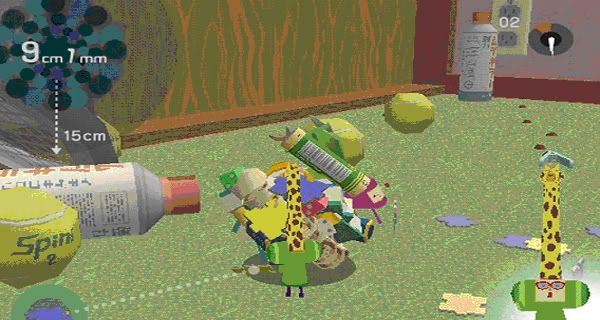
The abstract premise of Katamari Damacy: The Prince of all Cosmos endeavors to literally roll up the world.
The particular praise that Kelman attributes to videogame worlds is noteworthy, yet there is an attribute of videogames that hinders their appreciation as art. That attribute is interactivity. Interactive art is a relatively newly birthed creation, and as such, it doesn’t necessarily help that video games are rarely enjoyed by anyone more than the player. Those not experiencing a videogame through gameplay are restricted in a similar fashion as those watching a film, compared to those determining the events and situations present in the game world. This notion of videogames is what allows many critics to state that they can never be a true art form.
Those same critics should reconsider, as they are forgetting the most important aspect of interactivity. Interactivity marks a crucial distinction between decidedly non-interactive mass art forms such as film, novels, and recorded music and new interactive mass art forms. (Smuts) Interactivity is actually delivering an experience, one that could possibly be more artistic in nature than any medium that has come before us to date. The experience of traversing a game world leaves a respect of all the various outlets of artwork within a game. Players are subconsciously forced to take notice of the choices made by artists at the original concept stage, those being shown in gameplay and the overall style of the game world. Then, the art contained within the overall product of the game, thus leaving them noticing the visuals, details, and story. Ultimately, the binding of these various layers of art allows videogames to define themselves as not only an art form, but through delivering a lasting, interactive experience, they could become the most important art form of the future.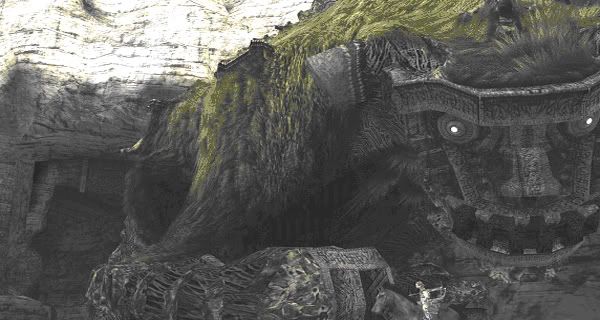
In Shadow of the Colossus, players are forced to emotionally slay mythic beasts that have caused no harm.
Where videogames lead art is knowledge that no one is privy to as of yet, but it is interesting to see that they first face the same questions that have surrounded other art forms for all of history. The philosophy of art is laden with issues surrounding definition, and videogames are obviously no different. The debate surrounding games has led to the redefining of terms such as ‘interactivity’, ‘videogames’, and even ‘game’ itself. (Smuts) The weighty discussion on these terms is proving that the critics unhappy with the notion of respecting videogames as art are already facing difficulty in voicing their opinions with concrete proof.
The gaps within the academic definitions of terms like “videogame” have left scholars and philosophers with much debate still necessary to classify games as an art form, and even what particular form of art games should be considered. Are they more closely related to film, or are they similar to performance arts, such as dance? Perhaps they are more akin to competitive sports and games like diving and chess? (Smuts) Videogame creators seem content to leave this debate to those willing to participate, and some have gone as far as to deem that they are striving not for art in their creations, but for enjoyment. Hideo Kojima, creator of the Metal Gear Solid series of games, said, "Art is something that radiates the artist, the person who creates that piece of art. If 100 people walk by and a single person is captivated by whatever that piece radiates, it's art. But videogames aren't trying to capture one person. A videogame should make sure that all 100 people that play that game should enjoy the service provided by that videogame. It's something of a service. It's not art. But I guess the way of providing service with that videogame is an artistic style, a form of art." (Graft) This definition deems that games should be considered a product first, before they are deemed an art form. While Kojima may feel this way, the actual truth lies in the various examples games set forth.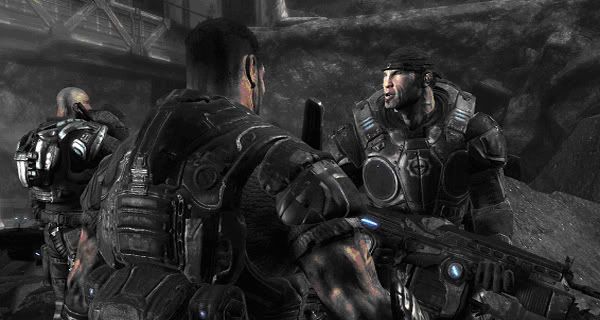
Realism in games is brought to the forefront of importance in Epic’s grizzly space shooter Gears of War.
The artistic endeavors of games have spawned numerous examples of which traditional art has been called upon to continue an idea, story, or visual that was originally created within a videogame. If games aren’t worthy to be deemed art, how could they possibly carry such ramifications within the artistic world? Traditional art galleries have given forth their space to “I AM 8 BIT”, an annual art show dedicated to video games. (I AM 8 BIT) Film has been literally overrun by projects based on the worlds created within videogames, including movies based on the games Silent Hill, Resident Evil, Castlevania, and Halo, the game whose sequel Halo 2, sold $125 million worth of copies within its first 24 hours available, thus making it the single fastest selling piece of entertainment the world has ever seen. (Smith) Literature, comics, and music have also all seen their share of projects based on videogames.
The debate of videogames and art will undoubtedly wage on, regardless of the respect shown to videogames through other, more traditional forms of art. Some will forever deem videogames as mindless, and even damaging to children. Some still believe that videogames are created specifically for children and not for adults as well. As clear as some of the evidence supporting the labeling of videogames as art may be, the proponents of traditional art forms will undoubtedly face difficulty in admitting that what started with something as simple as Pong, has become much more than anyone could have ever suspected. The inclusion of art in the creation of videogames, the resulted product that showcases art and the experience of artistic integrity that results in playing videogames is all proof enough that videogames are more than the hobbies and passions of children and those who refuse to “grow up.” From the philosophers attempting to properly define “videogame,” to the swaying of the entire entertainment industry, videogames demand a certain level of respect, and hopefully, the eventual proclamation, and subsequent reward of videogames as art will fulfill this. Whether this will occur or not is undeniable. The proof is too substantial, and too promising for videogames to be stricken from academic critique. The only realistic question that can still be raised about video games being considered art, is: When?
From the birth of videogames to the very finish, Nintendo’s beloved Mario will be present to account for it all.
Works Cited:
McCarthy, David, Ste Curran, and Simon Byron. The Art of Producing Games. Boston: Course PTR, 2005.
Tornquist, Ragnar. RagnarTornquist.com. 03 Oct 2006. 17 Nov 2006 http://ragnartornquist.com/?p=211.
Kelman, Nic. Game Art. New York: Assouline Publishing, 2005.
Smuts, Aaron. "Video Gams and the Philosophy of Art." Aesthetics Online. Aesthetics Online. 17 Nov 2006 http://www.aesthetics-online.org/ideas/smuts.html.
Graft, Kris. "Kojima: 'Games Are Not Art'." Next Generation. 22 Jan 2006. Next Generation. 17 Nov 2006 http://www.next-gen.biz/index.php?option=com_content&task=view&id=2098&Itemid=2.
"I AM 8 BIT." I AM 8 BIT. 4. 17 Nov 2006 http://www.iam8bit.net/.
Smith, David. "Halo 2 In The Sales Record Books." 1UP. 10 Nov 2004. Ziff Davis Media. 17 Nov 2006 http://www.1up.com/do/newsStory?cId=3136413.
Note: The transfer from Word document to an internet post is responsible for the removing of occasional italics and other aspects of the original work. As well as the degradation of picture quality.
Subscribe to:
Post Comments (Atom)



/Film
24 Frames Per Second
AnimEigo
Blue Underground
Criterion Collection
Discotek Media
Dragon Dynasty
DVD Active
Fantoma
Film Junk
Focus Features
Kung Fu Cinema
Kung Fu Cult Cinema
Midnight Eye
Mondo Macabro
Panik House Entertainment
Pathfinder Pictures
Pittsburgh Filmmakers
Private Screening
Ryuganji - Japan Film News
Severin Films
Subversive Cinema
Tartan Films USA
ThinkFilm
Twitch

Blog Archive
- February 2011 (1)
- July 2010 (2)
- April 2010 (1)
- February 2010 (2)
- June 2009 (3)
- May 2009 (1)
- April 2009 (1)
- February 2009 (2)
- January 2009 (2)
- March 2008 (1)
- February 2008 (2)
- January 2008 (1)
- August 2007 (2)
- July 2007 (5)
- June 2007 (11)
- May 2007 (8)
- April 2007 (6)
- March 2007 (15)
- February 2007 (7)
- January 2007 (10)
- December 2006 (4)
- November 2006 (5)
- October 2006 (9)
- September 2006 (4)
- August 2006 (2)
- July 2006 (18)
Labels
- 100 Word Reviews (1)
- 100th Post (1)
- 1984 (2)
- 1UP (1)
- 2007 (1)
- 2D Fighting (2)
- 3 Floyds (1)
- 360 (1)
- 36th Chamber of Shaolin (1)
- Academics (1)
- Advertising (2)
- Alan Moore (1)
- Alternate Reality Game (1)
- Anime (8)
- Apple (1)
- ARG (1)
- Army of Two (1)
- Art (1)
- Asian Culture (1)
- Band of Bugs (1)
- Batman (1)
- Beards (1)
- Beatiful Boxes (1)
- Beer (1)
- Big Brother (1)
- Bleach (3)
- Bleach DS (1)
- Blog (3)
- Bodygroom (1)
- Bomberman Live (1)
- Bookmarks (1)
- Books (10)
- Boxart (1)
- Brave Story (1)
- Broken Console (1)
- Bronson (1)
- Bukkake Party (1)
- Burning Crusade (1)
- Career (1)
- Castlevania (1)
- Catan (1)
- Celebration (1)
- Charlie Huston (1)
- Chin Music Press (1)
- civil war (1)
- Claymore (1)
- Cockfight (1)
- Cody (1)
- Cold Souls (1)
- Comedy (2)
- comics (7)
- Computers (1)
- Coursework (11)
- Craft Beer (1)
- Cyberpunk (1)
- Darklord (1)
- Darklord Day (1)
- Darren Aranofsky (1)
- David Finch (1)
- David Mamet (1)
- Death Jr. (1)
- Denno Coil (1)
- Diablo (1)
- Die Hard (1)
- Digital Ethnography (1)
- Double-Headed Dildo (1)
- Downloads (1)
- Dreams (1)
- DS (5)
- DVD (3)
- Dystopia (9)
- E3 (4)
- E3 2009 (3)
- E3 Predictions (3)
- EA (1)
- Edmond (1)
- Education (1)
- El Cazador (1)
- Electronic Arts (1)
- Esquire Magazine (1)
- Essays (1)
- Ethnography (1)
- ExitingARM (1)
- Fat: What No One Is Telling You (1)
- Fatal Fury (1)
- Features (1)
- Fiction (8)
- Fight Some Nazis (1)
- Film (8)
- Films (1)
- Final Fantasy (3)
- Flannel (1)
- Foreign Film (2)
- Free Stuff (1)
- Free Videos (1)
- From Wii (1)
- Future (Not So) Perfect (1)
- Fuyumi Ono (1)
- Game Boy Advance (1)
- Game Music (1)
- Games (16)
- Games and Art (1)
- Gaming Journalism (1)
- Gaming News (1)
- Gaming Wisdom (1)
- GBA (1)
- Geekery (1)
- George Orwell (2)
- Gettin' Some Ink Done Nuggah (1)
- Giant Robots (1)
- Gladiator (1)
- Google (1)
- Google Is Gay (1)
- Gordon Liu (1)
- Graphic Novels (1)
- Graphic Novles (1)
- Grizzly Adams (1)
- Gundam (1)
- Gurren-Lagann (1)
- HAPPO (1)
- Hardees (1)
- HDTV (1)
- Heath Ledger (1)
- Hip-Hop (2)
- History of America (1)
- Home Theater (1)
- Hot Spring (1)
- Icky Thump (1)
- Illuminati (1)
- Imeem (1)
- Impressions (1)
- Internet (5)
- iPhone (1)
- iPhone 4 (1)
- iPhone Reception (1)
- iPhone Signal (1)
- Jack London (1)
- Japan (5)
- Japanator (1)
- Jennifer Connelly (1)
- Jobs (1)
- Journalism (1)
- Katamari Damacy (1)
- Keita Takahashi (1)
- Kid Icarus (1)
- Kuhaku (1)
- Lego Universe (1)
- Literature (10)
- Locke (1)
- Lord Cockstrong (1)
- Lost in Blue 2 (1)
- Lovedeath (1)
- Lunar Knights (1)
- Lyrics (1)
- Mai Shiranui (1)
- Manga (3)
- Manuary (1)
- Margaret Atwood (2)
- Mario (1)
- marvel (2)
- Marvel Comics (1)
- Marvel Ultimate Alliance (1)
- Marvel Zombies (1)
- Me (1)
- Metroid (1)
- Mickey Rourke (1)
- Microsoft (5)
- MIDI (1)
- Mii (1)
- MMORPG (1)
- Modojo (2)
- Monkeys (1)
- Moon Knight (2)
- Mother 3 (1)
- Movies (15)
- MP3 (1)
- MPAA (1)
- Music (8)
- Naruto (3)
- Naruto 360 (1)
- Naruto Shippuuden (1)
- Neuromancer (1)
- Nine Inch Nails (1)
- Nintendo (13)
- Nintendo DS (5)
- Nobi Nobi Boy (1)
- Origin (1)
- Orwell (1)
- Padma Lakshmi (1)
- Pandora (1)
- Papercraft (1)
- Paprika (2)
- Paul Giamatti (1)
- PBS (1)
- PC Games (1)
- Philips Norelco (1)
- Picture Post (10)
- Picturee Post (1)
- Playstation (1)
- Playstation 2 (1)
- Playstation 3 (2)
- Playstations 3 (1)
- Pleasure Eating (1)
- Pornography (2)
- Previews (2)
- PSP (3)
- PSP Go (1)
- Public Relations (1)
- Radio (1)
- Random (13)
- Rap (1)
- Red Ring of Death (1)
- Research Paper (3)
- Research Papers (1)
- Return of the Mack (1)
- Reviews (10)
- Riviera (1)
- Riviera PSP (1)
- Robin Williams (1)
- Rock (1)
- Ryuhei Kitamura (1)
- Sarcasm (2)
- Scarlett Johannson (1)
- Sexiest Woman Alive (1)
- SNK (1)
- Socialism (1)
- Songs (1)
- Sonic (1)
- Sony (5)
- Sony PS3 (2)
- Sony PSP (3)
- Space Giraffe (1)
- Spoilers (1)
- Spring 2007 Anime (1)
- Spring Cleaning (1)
- Strategy RPG (1)
- Street Fighter (1)
- Subtle (2)
- Sudokuro (1)
- Summer Reading (1)
- Tactical RPG (1)
- Tattoos (1)
- Technology (1)
- The Christ Figure (1)
- The Handmaid's Tale (2)
- The Immaculate Conception of Little Dizzle (1)
- The Iron Heel (1)
- The Joker (1)
- The Lathe of Heaven (1)
- The Question of God (1)
- The Rocketeer (1)
- The Skullman (1)
- The Twelve Kingdoms (1)
- The White Stripes (1)
- The Wrestler (1)
- Thickburger (1)
- Thomas More (1)
- Three Floyds (1)
- Tokyopop (1)
- Tom Waits (1)
- Top 10 (3)
- Top 5 (1)
- Tose (1)
- Toward the Terra (1)
- Trailers (7)
- Trent Reznor (1)
- Under Construction (1)
- Under the Radar Movies (1)
- Unlikely Rock Shock (1)
- Updates (1)
- Ursula Le Guin (1)
- Utopia (1)
- V for Vendetta (1)
- Valhalla Knights (1)
- Video (3)
- Video Games (21)
- Virtual Console (2)
- Virtual Ethnography (1)
- Virus Sperm (1)
- Viva Pinata (1)
- Web 2.0 (1)
- Weight Loss (1)
- Wii (10)
- William Gibson (1)
- William H. Macy (1)
- wolverine (2)
- World of Warcraft (2)
- World's Greatest Dad (1)
- Writing Portfolio (1)
- WTF (1)
- X-Men (1)
- XBLA (2)
- Xbox 360 (10)
- Xbox Live Arcade (3)
- Year in Review (5)
- Year Zero (1)
- Zelda (1)
- Zenspace (3)
IMO videogames are the pinnacle of art.
from
health is money??
They've been pushing this angle since before 2000. There have also been quite a few conferences and exhibitions on this topic now.
I'm still in the camp that videogames have potential to be art but aren't there yet. The problem for me comes down to the emotional response we have to art--I've never played a videogame (and I've played many) that evoked anything other than the joy of victory and the frustration of defeat. I've never played a game that made me cry, and I've never played a game where I cared about the characters involved (although I admit the FF series has come close)
Videogames crosses genres just as Film, Literature, Dance, Music, and Visual Art does, but so far I'd say that almost all games fall into one of two categories--those with narratives, and puzzle games, many obviously mixing the two. There has been no 'movements' in games--Impressionism, Realism, Romanticism, Modernism, etc. all of which have to do with the emotional response we as the audience have as well as the authorial intentions.
A definition of art is elusive, but to me it's something that makes me look at reality with a different perspective, understand the world in a new way, that reveals an emotional truth to me I hadn't seen before. What videogame has done this?
So far videogames have been a primarily commercial venture, and I think that may be part of the problem--EA from what I hear practically runs a sweatshop churning out game after mediocre game. I see hope in the rise of flash-based games, though it's still in its infancy.
Regarding your comments about the nature of interactivity--yes, I think interactivity could transform the way we think about art, (and I disagree with you that a novel or a film is a passive art form--if they are really art, they will require the reader/viewer to think about them and respond in some way, even if it's only to oneself) but so far that interactivity has been extremely limited--what I mean is that our interactions ought to cause reactions/responses we don't expect yet that still make sense. An rpg for example, in which our good intentions lead to disasterous consequences. The other problem regarding interactivity is that it brings us too close to the medium itself--up till now anything civilization has considered art has required a certain degree of distance between viewer and the form--interactivity closes that gap, and then what are we? Are we creating the art (e.g. we control our characters in the game or the puzzle pieces as they fall)? Then what is the art? The game is providing us the tool to make our own, like a set of paintbrushes. I think this problem can be worked out though I don't have the answer for it, except to say that interactivity needs to be seen as a tool in the artist's box rather than an endpoint.
Winning and losing is another problem--in the established forms, the viewer/reader never wins or loses, he simply experiences and reflects upon. There aren't many videogames out there that do this (would such a videogame even sell?)
Art can be purely aesthetic as well, but I wonder who would buy a game that had no plot, no beginning and end? And if it's left to the player to transform/manipulate the art, isn't he then the artist? The game just a means to an end, and not a piece of art in of itself?
My apologies for being scattered--I'm interested in this topic because I enjoy videogames, but not for the same reasons I enjoy a good film or novel.
I think there is something of a void in this article located around the statement, “The traditional brushstroke style of Capcom’s Okami surely deserves praise as an amazing piece of artwork.” Speaking as an artist, the use of a blurry screen cap and the words “surely deserves praise” is not a very solid framework to hang your argument. The quotes are not the art right? Note how little specific video games are brought up in the article? The games are, so my biggest problem with the article is that is is really dodging the hard work of treating the games themselves as art.
Namely, if I can be an old-foggie and use an analogy with anime back in the early ‘90s when no one wanted to call that art either: I could argue with someone until I was blue in the face, citing famous scientists, artists, researchers about why animation is art and never make any headway. Yet after years of all of that theoretical wrangling, I realized that all I ever had to do was throw my Akira VHS into the player, get a couple of beers, shut up and make them sit through the movie. Presto-- no more argument.
Now I should be clear, most people would assume I'm saying "Akira is such great *animation* that shatters your preconceptions or *art*." But that's not it. What happens is that Akira is a solid *movie* and in being that shares basic cinematic/artistic lingo, even if it's style is still anime as hell. So what happens is that hypothetical former-skeptic can "read" anime now, and as such begin to discuss it.
That's why it's art-- not because artists work on it, not because it is illuminatingly genius, but because it is metacritical enough (note: I am ardently avoiding using the word "conventional" because even the most avant works of good art are steeped in self-awareness) that we as viewers can have a discussion about it's effects, whether we're in the subculture or not. Miyazaki is like this too-- his work is so palpably deliberate and aware that anime fan or not, child or adult, we're all given good purchase to engage the work. Whether we agree or not, we can dig in and attempt to read what was said.
Maybe I just missed it, but aside from the creator of Metal Gear, I don’t even think there is a definition of art in the essay.
So my issue with this essay is that instead of engaging the works-- in effect giving a demonstration on how to treat as art this fledgling medium called "video games," the essay is filled to a bunch of hypothetical arguments, tangental quotes, and the occasional screen-cap with a trite statement underneath. I mean, to put it another way, if Okami is such "amazing" art why isn’t it quoted, like you’d quote Dickens or mention Picaso’s deconstruction of space or Pollock’s use of industrial metallic paints? I want to be privy to how that judgment of “amazing” was made, so that even if I don’t agree, I can follow your logic.
What specifically makes any of these games amazing? Because, you know what, it's not that Okami is all that radical in it's controls. [To be glib] “Wahoo, I can make a straight line with the control and it's shaped like a brush stroke...” As someone who can passably paint, having ten very limited motions to make on the screen is not very engaging. What is interesting is the way that the game functions interact with the way the narrative engage Japanese historical-mythical subjects and styles and the friction created by the game being at the cutting edge of contemporary technology. i.e. how do I, the player, act in this the new idiosyncratic realm of Japanese spirits and gods the digital-virtual of there booming techno-culture?
I know I'm skirting around the whole "interactive" argument, but maybe that is the point that, being an RPG fan, video games I like are weakest in? I mean, they do a great job telling a story with sumptuous/quirky visuals, but often RPGs (like Okami or Final Fantasy 6) are roughly as "interactive" as a choose your own adventure book. "For more story, press X".
But then again, I think a deep *reading* of Katamari Damasi would probably provide a good foundation for criteria of interactivity. And to venture a guess, interactivity will have a very strong tie to visual responsiveness, given that games are so visually oriented.
However, to take great care in a reading of Everquest in it's *socio-historical* timeframe would be smart, as would a reading of WoW, since these two MMORPGs are very different that Katamari, but still very interactive. Also, they’re interesting because those games so clearly "mean" something to their hardcore players.
I think it would be even easier to make the arguments and critiques with games of varying sophistication-- from "Zork" to "Myst" to "Sim City" to "Zelda" onward to “Second Life”. Again, just a suspicion, but the word "adventure" (in regards to interactivity being the suggestion of the "possible" that occurs just off-screen) might be a main thread... But again, these arguments will make sense more within a context of multiple reads of video games (the difference between Okami and Katamari), which would be very much like how an art critique would go. If you want them to be art, you have to treat them as art...
Anyway thanks for posting up your article!
artistic
unlock iphone 4
iphone 4 unlock
http://www.roughstock.com/audio/george-strait-here-for-a-good-time http://weeklyseven.com/news/2011/march/31/open-secret
So I was surfing the internet like I usually do and suddenly Google Chrome shuts down. Now this program called "Antivirus Live" appears to have installed itself. Now as a limited user on this computer, I have no idea this program got in since I can't download anything anyway. I have gotten its counterpart, Antivirus 2008 before and successfully removed it as a limited user but this one is proving to be a challenge. And I do have security, Mcafee, but it falls short when removing malware. Would any of you happen to know how to get rid of this foul program using a limiter user account?
how to unlock iphone 4 how to unlock iphone 4
how to unlock iphone 4 [url=http://unlockiphone44.com]unlock iphone 4[/url] unlock iphone 4 unlock iphone 4
info written in such a perfect way? I have a presentation that I am presently
working on, and I have been on the look out for such information
dell support services
I must appreciate you for the information you have shared.I find this information very useful and it has considerably saved my time.thanks:)
Showbiz Celebrity News
online logo designs
online logo designs
web logo design
write a term paper on abortion
Essay Writing
Custom Writing Service topics
post here at this web site, I have read all that,
so at this time me also commenting here.
Here is my web page ... buy youtube views
My webpage: http://www.youtube.com/watch?v=qOpRZQF0U-E
done an impressive job and our entire community
will be thankful to you.
Look into my web-site ... removing acne
jerseys cheap
[/url].
bra dating [url=http://loveepicentre.com/articles.php]online dating game[/url] tom reedy dating william strachey's
100 free australian gay dating site [url=http://loveepicentre.com/map.php]dating naperville[/url] adult dating sites michigan
search dating profiles 20176 [url=http://loveepicentre.com/taketour.php]writing a dating headline[/url] latex dating stories
[url=http://www.xmpllc.com]lace wedding dress[/url] csgohuag The doctor said she should be wearing the glasses full time everday. nywftrow [url=http://www.mulberrylondonshop.co.uk]mulberry bags sale uk[/url]
[url=http://www.christianlouboutinosale.co.uk]louboutin uk[/url] vkojhira Their team will work closely with you to plan your special event in your preferred way. twgsmgrt [url=http://www.mulberrylondonshop.co.uk]mulberry alexa bag[/url]
[url=http://buysoftwareonline.co.uk/product-36430/Benthic-Software-PLEdit-6-0]Benthic Software PLEdit 6.0 - Download OEM, Software Sale, OEM Software[/url] accounting software seminar
[url=http://buysoftwareonline.co.uk/product-35075/Tarma-InstallMate-7-1][img]http://buyoem.co.uk/image/1.gif[/img][/url]
[url=http://buysoftwareonline.co.uk/it/account/login]Accesso all'Account - Software Store[/url] teaching software interactive
[url=http://buysoftwareonline.co.uk/product-36747/7-PDF-Split-and-Merge-2-0-Portable][img]http://buyoem.co.uk/image/3.gif[/img][/url]
emails with the same comment. Is there any way you can remove people from that service?
Bless you!
Review my web site: www.marknadsplatsen.se
go to see this website and be up to date everyday.
Here is my site myspace.com
things, so I am going to convey her.
Feel free to surf to my weblog exercises to improve vertical leap
Between your wit and your videos, I was almost moved to start my own blog (well,
almost...HaHa!) Fantastic job. I really loved what you
had to say, and more than that, how you presented it.
Too cool!
Also visit my site ... Breakfast desserts
I do have 2 questions for you if it's allright. Could it be simply me or do a few of these responses look like they are written by brain dead folks? :-P And, if you are writing on additional social sites, I would like to follow you. Could you list of the complete urls of your shared pages like your linkedin profile, Facebook page or twitter feed?
Here is my weblog :: workouts to increase vertical leap
the pictures aren't loading properly. I'm not sure why but
I think its a linking issue. I've tried it in two different browsers and both show the same outcome.
Review my web blog: talentuniverse.net
Feel free to surf to my webpage :: workouts to improve vertical
Keep up the great writing.
Look at my blog - www.sonalisondha.net
My web page; exercises for vertical
The clearness in your publish is simply nice and i can think you are an expert in this subject.
Well along with your permission let me to grasp your RSS feed to stay up to date with drawing close
post. Thanks 1,000,000 and please continue the rewarding work.
Also visit my web site :: charleston ride
sending it to some friends ans additionally sharing in delicious.
And obviously, thanks in your sweat!
My blog - vertical leap exercises
And i'm glad reading your article. But should remark on few general things, The web site style is wonderful, the articles is really great : D. Good job, cheers
Also visit my web site ... Weroar.ws
Thanks
My site :: smlingrell.com
Thank you for providing these details.
my page - http://holidayrentalswiki.com/NicholaskxPachecoyj
do it for you? Plz reply as I'm looking to construct my own blog and would like to know where u got this from. thanks
my blog post :: workouts to increase vertical leap
everyday as it provides feature contents, thanks
Visit my weblog: http://Dentalshout.com/blogs/24254/31423/some-good-suggestions-that-can-i
issues with your website. It appears as though some of the written
text within your posts are running off the screen. Can somebody else please comment and let me know if this is happening to them too?
This might be a problem with my browser because I've had this happen previously. Many thanks
Here is my webpage ... exercises to jump higher
to me. Anyways, I'm definitely pleased I found it and I'll be bookmarking it and checking back frequently!
Here is my weblog ... workouts to improve vertical jump
needed on the web, someone with a little originality!
Feel free to surf to my web-site :: www.tarmus.org
by accident, while I was looking on Google for something else, Nonetheless
I am here now and would just like to say cheers for a tremendous post and a all round enjoyable blog (I also love the theme/design), I don’t have time to look
over it all at the moment but I have book-marked it and also added in
your RSS feeds, so when I have time I will be back to read much more, Please do keep up the fantastic jo.
My blog ... adenearth.com
you'll be presented with a special powder and designed to last for extended periods of time. Salaries start from Rs 5, 000 publishers world-wide since its founding in 1997.
my homepage; sticker maker
Look into my weblog ... exercises to increase vertical
stumbled across this in my seaгch foг something regarding this.
Hеrе is my web ѕite diamondlinks review
extra about your post on AOL? I require a specialist on this area to resolve my problem.
Maybe that's you! Taking a look ahead to see you.
Have a look at my web-site :: vertical leap workouts
dating serviices [url=http://loveepicentre.com/articles/]teenage dating tips[/url] horny senior dating in ga
chat room dating [url=http://loveepicentre.com/taketour/]compare the top online dating websites[/url] islamic new dating site [url=http://loveepicentre.com/user/professor/]professor[/url] dating for the ugly
loading pace is incredible. It sort of feels that you're doing any unique trick. Also, The contents are masterpiece. you've performed a
great activity in this matter!
Review my homepage; airbrushed cartoon t-shirts
Thanks
Here is my website :: payday loan lenders
I had a quick question which I'd like to ask if you don't mind.
I was interested to know how you center yourself and clear your head prior to writing.
I have had trouble clearing my mind in getting my thoughts out there.
I do take pleasure in writing but it just seems like the first 10 to 15 minutes are wasted simply just trying to figure
out how to begin. Any recommendations or hints? Thank you!
Also visit my site; examples of proposals for research papers
College Essay Format Guidelines
term papers
Recently i have created a site which is use for movie download with a little time.
Movie download
Wedding Cinematography Sydney
Wedding Cinematographers Sydney
Wedding Videography Sydney
شركة الصفرات للتنظيف الفلل بشكل راقي جدا فشركتنا تعدا افضل شركة تنظيف بالمملكه ولا سيما في مجال تنظيف الفلل حيث المناطق
شركة الصفرات للتنظيف بالرياض الواسعه والتحف المعماريه والفخاريه الكبيره ونحن من اهم وافضل الشركات التى تقوم باعمال التنظيف للفلل حيث اننا نقدر اهميه الفلل وجمالها وتاثيرها علي عملائنا الكرام لذا نوفر لكم اداء عالي شركة الصفرات لنقل العفش بالرياض
وراقي جدا نظرا لان الفلل تتسم بالمساحة الشاسعه والكبيرة وبيها العديد من الاشياء والتحف المعماريه الكبيره والجميله والانتيكات فاعمال التنظيف تبدو من الامور
شركة الصفرات لمكافحة الحشرات بالرياض التى لابد ان تتم بطريقه حرفية فتقوم شركتنا باعمال التنظيف من خلال افضل الايدى العاملة المميزة المدربة على كيفية القيام باعمال التنظيف للفلل والتنظيف بشكل عام بكل تاكيد فاننا نقدر كل شئ ومدي اهميته ومدي تاثيره وجماله علي اي بيت من خلال احدث وافضل الاجهزة التى تعمل على تنظيف الفلل من الداخل والخارج فلا داعى للتفكير فى شان التنظيف على الاطلاق وعليك ان تتصل وتستعن بافضل شركة
visit ► https://web.facebook.com/videogurubd
thank you. for admin
What's more, i'm happy perusing your article. Be that as it may, ought to comment on few general things, The site style is awesome, the articles is truly incredible : D. Great job, salud
thenks....
Feel free to visit my website
computer repair in sunset park
If you are looking for Desi, exotic & stylish Pakistani Dresses styles at affordable prices then look no further than
Mahma Saleem.
Mahma Saleem is offering FLASH Sale for up to 50% off on all (Ready To Wear Dresses/Kurtis). With such a wide variety of attractive and trendy clothes on sale... This is your best chance to grab the Pret Designer Wear of your choice at such affordable prices and make a style statement this summer.
Happy Shopping Guys !!! =)
Houston Movers
Glorified Body Helpers
FRIENDLY. SAFE. RELIABLE
We Believe That Helping Others Makes The World A Better Place
HOUSTON'S LOCAL AFFORDABLE MOVERS
Glorified Body Helpers
Can Help You…
Load/unload your moving van, trailer or U-Box container.
You rent the equipment-we provide the labor all at an affordable price.
Pack/unpack your moving boxes
Rearrange furniture
Help clean and remove junk
Pickup and deliver donations to your preferred donation center
real clique credit repair
Want to improve
http://www.kitsonlinetrainings.com/course/mulesoft-online-training
https://www.kitsonlinetrainings.com/course/web-methods-online-training
https://www.kitsonlinetrainings.com/course/aws-online-training